
A mature willow oak stands thirty feet from the back corner of the house. A section of driveway near it has lifted maybe an inch. Then a foundation repair salesman walks the property and says the tree has to go, and suddenly a homeowner who loved that oak is pricing removals.
Before anyone fires up a chainsaw, it is worth knowing what roots actually do underground, because most of what gets repeated about tree roots foundation damage is half true at best. Roots get blamed for a lot of concrete problems they did not start. Sometimes they deserve the blame. Usually the truth is more specific than “the tree is destroying your foundation,” and the right fix is smaller and less expensive than a removal.
Here is how Paul Clower’s family-owned, bonded and insured crew, which has worked around Hot Springs foundations for years, actually thinks about it. A ten-minute call to 501.538.1606 usually settles whether a visit is even needed.
What tree roots foundation damage actually looks like under a slab
Start with what roots are not. They are not hydraulic rams boring through solid concrete. A healthy slab poured on stable soil can sit next to a large oak for fifty years without a crack that traces back to the tree.
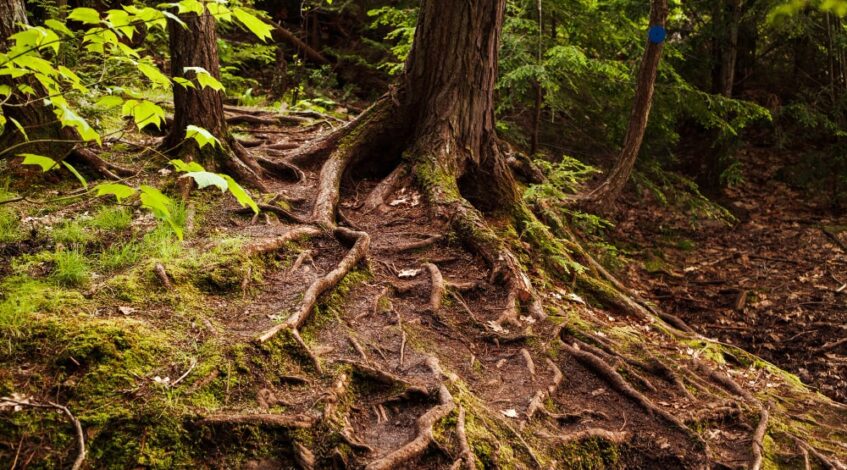
What roots are is opportunistic. They grow where water and oxygen are, which in Garland County usually means the top 12 to 18 inches of soil, spreading out one to two times the width of the canopy. When a root meets an obstacle, it does not punch through. It follows the path of least resistance, and it thickens slowly over years wherever it settles in.
Trouble starts when the ground around the house is already unstable. Much of Central Arkansas sits on clay soils that swell when wet and shrink when dry. In a July like this one, a big tree pulls hundreds of gallons of water out of that clay every week. The soil on the tree side of the house dries and shrinks more than the soil on the far side, the slab loses even support, and hairline cracks open. Water then follows those cracks, fine roots follow the water, and the roots thicken inside gaps that the moisture imbalance created first.
So the tree is rarely the original cause. It is an amplifier. That distinction matters, because removing the amplifier without fixing the moisture problem often leaves the homeowner paying for a removal while the slab keeps right on moving.
Driveways and sidewalks are a different story, and a fairer complaint against the tree. Those slabs are thin, unreinforced or lightly reinforced, and poured right on top of the root zone. A structural root thickening under a four-inch driveway panel will lift it. That heaved panel is real damage, but it is also a concrete problem, not a sign the house is next.
Warning signs that deserve attention
Most trees near houses are doing no harm at all. A few situations are worth watching closely:
- A heaved or tilted driveway section with a visible root ridge running toward it, especially within about 15 feet of a large trunk. This is the most common and least serious pattern.
- Doors sticking on one side of the house, or new drywall cracks above door frames on the side facing a large tree. Count a tree as close if it stands nearer to the house than its own height. Sticking doors alone prove nothing. Sticking doors on one side, plus a big tree on that same side, plus a dry summer, is a pattern worth a professional look.
- Sewer backups or slow drains that return after clearing. Roots do not crush intact pipe, but older clay and cast iron lines have joints, and a joint that seeps is an invitation. Fine roots enter at the seep and grow into a mat inside the pipe. A plumber’s camera settles this question in twenty minutes, and it costs far less than guessing wrong about which tree, if any, is responsible.
- A tree that has changed. Sudden lean, lifted soil on one side of the trunk, or large dead limbs mean the root system itself may be failing. That is a tree stability question, and it is more urgent than any slow concrete movement. The team at Clower Tree Service treats those calls differently than root-and-driveway questions, because a failing root plate can drop a whole tree.
What does not belong on this list: surface roots in the yard, small cracks in a garage floor, or a neighbor’s story about roots wrecking a house across town. Those are reasons to ask questions, not reasons to remove a healthy tree.
Your realistic options, in order
When a tree and a slab are genuinely in conflict, there is a ladder of responses. The right move is the lowest rung that solves the problem.
Monitoring. Mark the crack ends with a pencil and a date, photograph the driveway seam, and check again in six months. Concrete moves seasonally in shrink-swell clay. Movement that stops and reverses with the weather is a soil moisture story, not a root emergency. Keeping soil moisture near the foundation consistent during dry stretches does more for a slab than most homeowners expect.
Root barriers. A trench cut between tree and slab, fitted with a solid barrier panel, guides most new root growth downward and away. Barriers work best as prevention or early intervention, before major roots have crossed the line. They are a fraction of the cost of removal and the tree keeps its shade.
Selective root pruning, done by a professional. Sometimes one or two offending roots can be cut cleanly at the barrier line without hurting the tree. Selective is the key word. The wrong cut in the wrong season can cost the tree. Which roots can go and how close to the trunk are judgment calls that depend on the species, the tree’s condition, and how much of the root system has already been disturbed.
Removal, as the last resort. Some conflicts are not fixable. A large tree planted five feet from a foundation decades ago, roots already under the footing, repeated sewer intrusion in an unlined pipe, or a tree in decline on the house side of the property. When removal is the right call, it should be a planned, rigged, sectioned removal by an insured crew, not a race with gravity. That is the work tree removal crews train for, and typical Arkansas cost ranges are laid out in full in the 2026 pricing guide. A written estimate is the only number worth planning around.
Not sure which rung fits your situation? A free on-site look sorts the fixable from the serious before any money moves.
Why cutting big roots yourself can bring down the tree
The roots closest to the trunk are not plumbing. They are the anchor. Structural roots within several feet of the trunk hold the tree upright against every storm it will ever face, and they do not grow back the way branches do.
Cut a major root on one side to save a sidewalk, and the tree may look fine for a year or two. Then a saturated March storm arrives with wind from the wrong direction, and the side that lost its anchor gives way. A destabilized 70-foot oak near a house is a far worse problem than a lifted driveway panel ever was. This is the one place where a homeowner with a rented saw can turn a minor annoyance into a genuine hazard, and it is why root cutting decisions belong with someone who can read the whole tree.
Where a tree service fits, and where it does not
Scope matters here, and it deserves to be stated plainly. Clower Tree Service handles the tree side of this problem: assessing whether a specific tree is stable, whether its roots are plausibly the issue, whether pruning or removal makes sense, and doing the removal safely when that is the answer. The family-owned crew is bonded and insured, and estimates are free.
Foundation repair itself, pier work, slab leveling, and sewer line replacement are different trades. A good tree assessment tells you whether the tree is part of the problem, so you are not paying for foundation work that the clay and the weather will undo, and not removing a healthy oak that was never guilty.
Talk to a local Hot Springs tree service
If a tree near your house has you second-guessing every crack, get a straight answer before you spend real money. Clower Tree Service serves Hot Springs, Hot Springs Village, Malvern, and the rest of Garland County, Paul walks these properties himself, and his crew will tell you plainly whether a tree is fine or whether it actually needs work.
Call 501.538.1606 or email info@clowertrees.com for a free estimate. No pressure, no scare stories, just an experienced local look at the tree side of the question.