
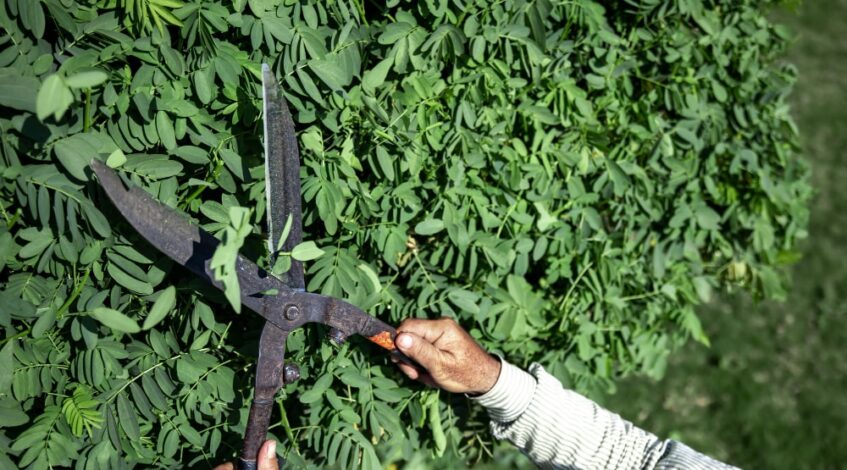
Keep your trees healthy and your property looking its best with our professional tree trimming and pruning services. We remove dead, diseased, or overgrown branches, improving tree health and appearance while preventing potential hazards.
Tree Trimming and Pruning Questions
Questions we hear from homeowners around Hot Springs, Hot Springs Village, and the rest of Garland County.
What is the difference between trimming and pruning?
In everyday use the words get swapped, but they solve different problems. Trimming is mostly about shape, clearance, and light: cutting back growth that is crowding a roofline, blocking a driveway, or making the canopy too dense. Pruning is about the health and structure of the tree: taking out dead, diseased, rubbing, or poorly attached limbs so the tree puts its energy into the wood that is worth keeping. Most visits are some of both. What matters more than the label is that the cuts are made at the right place on the branch, because a bad cut is permanent.
When is the best time to trim trees in Arkansas?
For most hardwoods here, late winter into early spring, while the tree is dormant and before bud break. The structure is visible with the leaves off, the tree seals the wounds quickly once it wakes up, and disease and insect pressure is at its lowest. There are exceptions worth knowing. Oaks are best left alone in spring and early summer because of oak wilt pressure during the active season. Spring-flowering trees are usually pruned right after they bloom, so you do not cut off next year’s flowers. Dead, broken, or hazardous limbs come off whenever you find them, in any season, because a dead limb over a walkway is not waiting for February. Storm-damaged limbs are a different call again, and those go through our emergency tree service.
How often do trees need trimming?
It depends more on the tree than the calendar. Fast-growing species and anything near a roof, a driveway, or a service line tend to need attention every two to three years. Mature, well-shaped hardwoods with clearance around them can often go five years or longer. The useful habit is to look up once a year after leaf drop and note anything dead, crossing, or hanging over something you care about.
When is trimming not enough?
When the problem is structural rather than in the canopy. A hollow or split trunk, a lifting root plate, or a canopy that is mostly dead are not trimming problems. Those are conversations about tree removal. There is also a middle case worth knowing about: a tree with a weak union or a heavy co-dominant stem can sometimes be kept with bracing and cabling instead of being taken down. We will tell you which category your tree is in.
How much can be taken off at once?
Less than most people expect. A healthy mature tree can generally give up a modest share of its live canopy in one season without stress, and mature trees tolerate less than young ones. This is also why we do not top trees. Topping removes the canopy indiscriminately, forces weak regrowth from the cut ends, and leaves a tree that is more likely to fail later, not less. If someone offers to top your tree, that is worth a second opinion.
What does a trimming visit look like?
Owner Paul Clower looks at the whole tree before we make a cut and tells you what we intend to take and why. Brush is chipped and hauled, cuts are made at the branch collar rather than flush to the trunk, and the area is cleaned up before we leave. Clower Tree Service is family owned, bonded and insured, and serves Hot Springs and Garland County. Call 501-538-1606 for a free estimate, or see our full range of tree services.